
IAP Sessions.
Vai Brasa: When a Good Idea Meets the Wrong Narrative
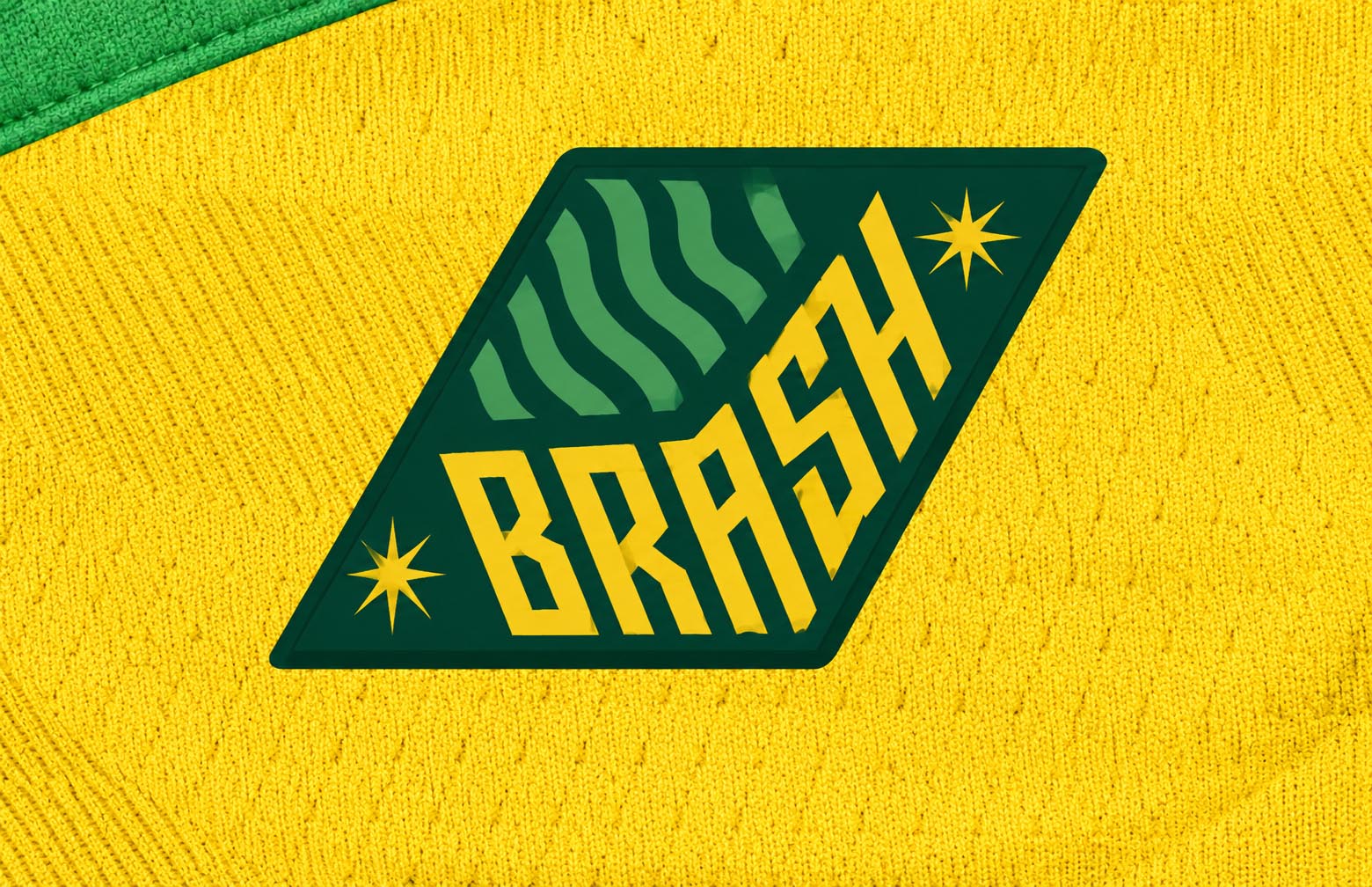
Recently, Nike unveiled the new Brazilian National Team kits for the 2026 World Cup. As part of the project, the brand introduced a concept…
IAP Sessions.
It is increasingly difficult to distinguish one brand from another.
Across different industries, visual identities begin to converge. The same typographic styles, similar color palettes, familiar compositions. What once felt contemporary quickly becomes repetitive, creating an environment where everything appears interchangeable.
This is not a coincidence.
It is the result of how decisions are made.
The problem is not the use of references itself.
It is the absence of a clear point of view.
Without a defined position, decisions tend to follow what is already validated externally. Trends become shortcuts for direction. Aesthetic choices replace strategic thinking. Over time, the brand loses the ability to establish its own identity, because it is constantly adapting to what others are doing.
This creates a cycle of uniformity.
As more brands adopt similar solutions, those solutions become the norm. New projects then reference this growing pool of similar work, further amplifying the pattern. The result is a landscape where originality is diluted and recognition becomes harder to achieve.
Breaking this cycle requires a different approach.
Differentiation is not a matter of simply doing something visually distinct. It is the result of making decisions based on internal clarity rather than external validation. When a brand understands what it stands for, what it needs to communicate, and how it wants to be perceived, it can establish its own criteria.
These criteria then guide every choice.
Visual identity, tone of voice, structure, and expression are no longer defined by trends, but by alignment with a clear direction. This does not eliminate influence, but it places it in context. References become tools, not foundations.
Consistency plays a crucial role in this process.
A distinct idea only becomes recognizable when it is applied repeatedly over time. Without consistency, even the most unique direction loses impact. With it, the brand gains clarity and presence.
Most brands look the same because they are built from the outside in.
They start with what is already visible, instead of defining what should exist.
To create something distinct, the process needs to be reversed.
It needs to start from within, and be sustained with discipline.
IAP Sessions.
Recently, Nike unveiled the new Brazilian National Team kits for the 2026 World Cup. As part of the project, the brand introduced a concept…

IAP Sessions.
In today’s market, the biggest trend I see is that people are becoming less willing to build something and far more committed to pushing…
IAP Sessions.
Many brands rely heavily on references. They look at what is currently considered successful, extract visual patterns, and attempt to replicate them. This approach…